 how-to
What Are the NJ SORA License Background Check Requirements?
Last Updated: October 30, 2026
Quick Summary
The nj sora license background check requirements mean the New Jersey State Police run a criminal history check, including fingerprints through state and federal databases, before issuing your registration. The check covers arrests, convictions, open warrants and pending cases, not just felonies, so an unresolved old charge can stall your application.
- Complete your 24-hour SORA training with an approved instructor before you submit your application.
- Get fingerprinted at an IdentoGO center and bring your SORA application number so prints link to your file.
- First- or second-degree convictions are a permanent bar in most cases under the Security Officer Registration Act.
- An arrest without a conviction does not by itself bar registration, but an open charge holds the application.
- New Jersey offers no reciprocity, so out-of-state guards still complete the 24-hour course and State Police check.
Table of Contents
- What the NJ SORA License Background Check Actually Screens For
- The NJ SORA Application Process, Step by Step
- NJ SORA Fingerprinting Requirements and IdentoGO Appointments
- NJ SORA Disqualifying Offenses and Moral Turpitude Findings
- NJ SORA Background Check Processing Time and What Delays It
- Appeals, Expunged Records, and Applying From Out of State
- Start Your SORA Training With Sora Center For Training
- Frequently Asked Questions
What the NJ SORA License Background Check Actually Screens For
This guide breaks down what that check looks for, how to prepare for it, and what to do if something on your record raises a flag.
Here is the core fact most applicants miss. New Jersey does not just check for felonies.
The screening covers:
- Criminal history in New Jersey and other states
- Fingerprint results run through state and federal databases
- Open warrants or pending cases
The state wants guards who can be trusted with public safety. That is why the check is thorough.
The NJ SORA Application Process, Step by Step
The NJ SORA application process is a sequence. Skip a step and the whole thing stalls.
- Complete your 24-hour SORA training with an approved instructor.
- Submit your initial application through the New Jersey State Police SORA system.
- Get fingerprinted at an IdentoGO center.
- Pay the application fee and any fingerprint fees.
- Wait for the background investigation to clear.
- Receive your active credential and registration card.
The order matters. For a full walkthrough of each step, see our guide on how to get a NJ SORA license.
A common mistake is rushing the form. Our breakdown of common SORA application errors shows where people trip up and how to avoid a rejection.
Here is the sequence every applicant follows, from training to credential.
| Step | What to do |
|---|---|
| 1 | Complete your 24-hour SORA training with an approved instructor |
| 2 | Submit your initial application through the State Police SORA system |
| 3 | Get fingerprinted at an IdentoGO center |
| 4 | Pay the application fee and any fingerprint fees |
| 5 | Wait for the background investigation to clear |
| 6 | Receive your active credential and registration card |
NJ SORA Fingerprinting Requirements and IdentoGO Appointments
Fingerprinting is mandatory for SORA registration. Applicants should confirm the approved fingerprinting process with the State Police before scheduling.
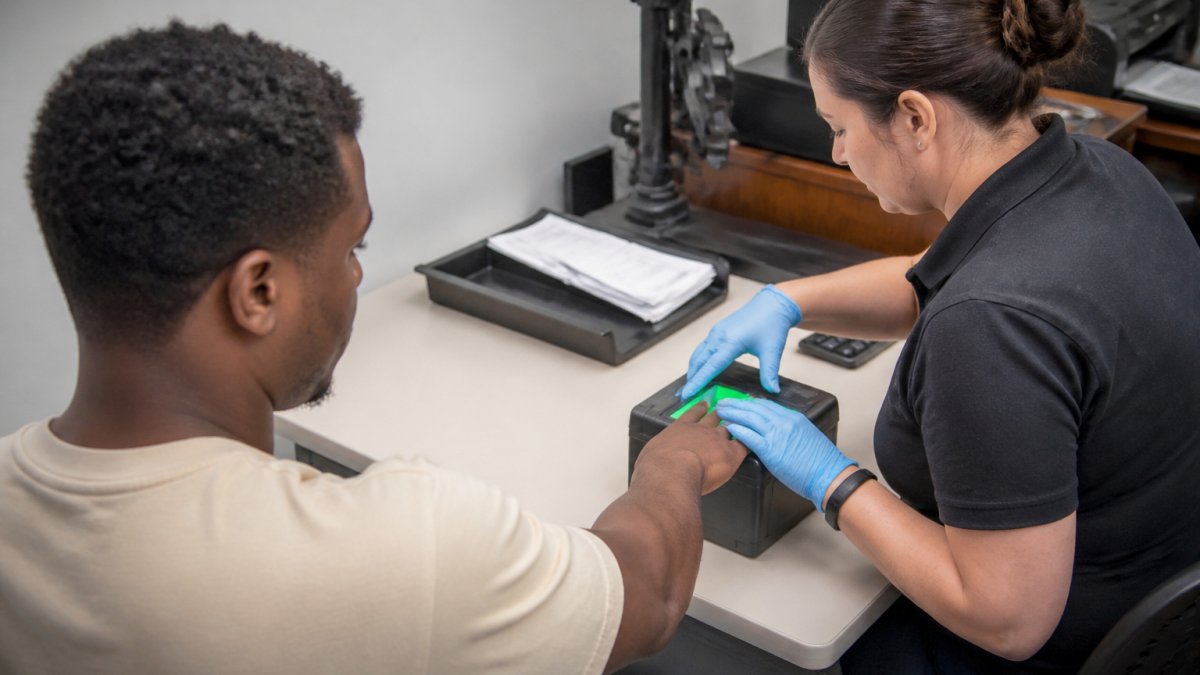
Here is what to expect:
- Book an appointment online or by phone before you go.
- Bring valid identification, usually a government-issued photo ID.
- Provide your SORA application number so the prints link to your file.
NJ SORA Disqualifying Offenses and Moral Turpitude Findings
The legal authority for SORA disqualification is the Security Officer Registration Act, N.J.S.A. 45:19A-1 et seq., and the State Police regulations that implement it. The statute does not use a vague "bad character" test. It lists specific categories of convictions that bar registration, and it separates automatic bars from convictions the Superintendent has discretion to weigh.
Convictions that bar registration outright
Under the Act, an applicant is disqualified if they have been convicted of any of the following, whether in New Jersey or elsewhere:
- A crime of the first, second, or third degree under New Jersey law
- An equivalent offense under the law of another state or federal jurisdiction
- A disorderly persons offense involving an act of violence
A first- or second-degree conviction is a permanent bar in most cases. Third-degree and disorderly persons convictions are evaluated against the statutory language, and the Superintendent may consider the nature of the offense, the time elapsed, and evidence of rehabilitation.
What is not an automatic disqualifier
- An arrest without a conviction does not by itself bar registration, but an open charge will hold the application until it is resolved.
- A conviction that has been expunged by court order generally will not appear on the criminal history record the State Police receive, and it should not be treated as a disqualifier, but you may need to produce the expungement order to prove it.
- A conditional discharge or pretrial intervention (PTI) completion is not a conviction, but the underlying arrest may still appear on the record and require explanation.
- A municipal ordinance violation is not a crime of moral turpitude unless it maps to a statutory offense.
How the Superintendent's review works
The Superintendent of the State Police (or a designee) makes the final registration decision. When a record contains a potentially disqualifying conviction, the file is reviewed individually rather than auto-rejected.
If you are unsure whether a specific conviction falls inside the statutory bar, our guide on how to get a NJ SORA license walks through the application sequence, and our breakdown of common SORA application errors covers the disclosure mistakes that cause denials.
NJ SORA Background Check Processing Time and What Delays It
Processing time varies by applicant. Clean records generally move faster, and complicated histories can take longer. For the full breakdown, see our NJ SORA license processing time timeline.
What slows things down:
- Fingerprint rejections that need a redo
- Out-of-state records that require manual follow-up
- Open cases or unresolved charges
- Incomplete applications with missing details
The State Police will not issue an active credential until every check clears.
Plan for delays rather than against them. Apply early, and do not book a job start date until your card is approved.
Appeals, Expunged Records, and Applying From Out of State
Most guides stop at "you can be denied." The part that actually matters is what you do next. This section covers the three situations that generate the most high-intent questions: a denial you believe is wrong, an expunged record that should not count against you, and a record built in another state.
Challenging a denial or an inaccurate record
A SORA denial is an administrative action, and it comes with a written notice stating the reason. You have a limited window to respond, and the clock starts on the date of the notice, not the date you open the envelope. Missing the deadline generally forfeits the challenge, so treat the notice as urgent.
The practical sequence looks like this:
- Request the basis of the decision in writing. Ask the State Police for the specific record relied on. You are entitled to know what they saw.
- Pull your own certified dispositions from the court that handled each case. A disposition shows the charge, the plea or verdict, and the sentence.
- Identify the error category. The three common ones are: identity mismatch (someone else's record merged with yours), an expunged or vacated conviction still showing, and a conviction that does not actually fall within the statutory bar.
- Submit a written challenge with documentation. Attach the certified dispositions, the expungement order if applicable, and a short statement explaining the discrepancy.
- If the agency affirms the denial, the next step is the appeal route available under the Administrative Procedure Act, N.J.S.A. 52:14B-1 et seq., which can include a hearing before an administrative law judge. This is where an attorney who handles licensing matters earns their fee.
If the problem is an identity mismatch, ask the State Police and the FBI to review the record under the FBI's identity-theft and record-review procedures. A merged record is fixable, but only if you can show the fingerprints and the disposition belong to different people.
How expunged records affect eligibility
An expungement under N.J.S.A. 2C:52-1 et seq. extracts the arrest and conviction from the record and, in most cases, the State Police will not report it on the criminal history check. That is the good news. The caveats matter:
- Keep the expungement order. If the record surfaces anyway, because a vendor or an out-of-state repository still holds it, the certified order is your proof.
- Expungement does not erase the underlying facts from every database. Some private background check vendors retain data, and the State Police may still see an arrest entry that has not been updated. The order is what resolves it.
- Not every disposition is an expungement. A conditional discharge, a dismissal, and a vacated conviction are different legal events with different record consequences. Know which one you have.
Applying with an out-of-state record
If you are moving to New Jersey with security credentials from another state, expect extra steps. New Jersey does not offer reciprocity for SORA registration, you still complete the 24-hour course and the State Police check. What changes is the record review:
- Your home-state criminal history must be verified. The State Police run the FBI check, but a disposition from another state may require manual follow-up, which adds processing time.
- Out-of-state convictions are compared to New Jersey offense categories, not to the label used in the convicting state. A misdemeanor elsewhere can map to a third-degree crime here.
- Certified dispositions from the convicting court are the fastest way to resolve a foreign record. Request them before you apply, not after a delay notice arrives.
The appeals and expungement path is where most applicants lose time they did not have to lose. Pull your record, get certified dispositions, and respond to any notice in writing within the stated deadline. If you are coming from another state, start the disposition requests early, the record review, not the training, is usually the long pole.
If you are coming from another career or another state and want the full path laid out, our guide on how to become a security guard in NJ covers the 7 steps from scratch. And if a denial happens, act fast. Deadlines for appeals are strict, and missing one forfeits your chance.
Start Your SORA Training With Sora Center For Training
The background check is only one piece of the puzzle. Before the State Police will look at your record, you need to complete the mandatory 24-hour SORA course from an approved training provider.
That is where we come in. Sora Center For Training is an authorized SORA training provider. We guide first-time applicants and renewing guards through the state requirements with clear, accessible courses.
Here is how we help:
- 24-hour SORA training for licensing
- Support for first-time applicants and re-certification
- Guidance on the State Police registration steps so you do not miss a requirement
Ready to begin? Visit our website for current course details and start the process the right way.
Frequently Asked Questions
What background check is required for an NJ SORA license?
You need a criminal history background check run through fingerprinting before the New Jersey State Police will issue a SORA registration. Applicants should be prepared for a criminal history review. Requesting your own court disposition paperwork early is a sensible step.
Can you get an NJ SORA license with a criminal record?
Sometimes, but it depends on the offense. Eligibility depends on the specific record. Consult the official New Jersey State Police SORA guidance for the disqualifying offense criteria, and gather certified court dispositions for any prior matters before applying.
How long does the NJ SORA background check take?
Processing time varies by applicant and by the complexity of the record. Check the official New Jersey State Police SORA guidance for current processing information.
Do you need to be fingerprinted to get an NJ SORA license?
Yes. Fingerprinting is a mandatory part of the NJ SORA requirements. Confirm the approved fingerprinting process and any identification requirements with the New Jersey State Police before your appointment.
The background check rewards preparation. Know your record, gather your documents, and complete your training with a provider you trust. Get started with Sora Center For Training and move through your SORA requirements with confidence.