 how-to
Does NJ SORA Training Require Prior Experience?
Table of Contents
- The Short Answer: Prior Experience Is Not Required for SORA Training
- What SORA Means and Who Needs It
- NJ SORA Training Requirements for First-Time Applicants
- NJ SORA Training Duration: What to Expect
- SORA Training Course Topics and What Beginners Learn
- NJ SORA Training Online: Format and Flexibility Options
- The SORA Application and Registration Process
- What Happens After You Complete SORA Training
- Frequently Asked Questions
Last Updated: October 17, 2026
The Short Answer: Prior Experience Is Not Required for SORA Training
No, does NJ SORA training require prior experience, the answer is straightforward. The New Jersey State Police does not mandate prior security experience to enroll in SORA training.
What matters instead is meeting basic eligibility requirements: you must be at least 18 years old, have a valid form of identification, pass a background check, and complete the fingerprinting process.
The training is designed for people starting fresh in security.
What SORA Means and Who Needs It
SORA stands for the Security Officer Registration Act. Every person who works as a security guard in New Jersey must complete SORA training and registration, there are no exceptions.
The New Jersey State Police administers SORA requirements. This isn't optional or industry-specific.
Who needs SORA training? Anyone seeking employment as a security guard or security officer in New Jersey. This includes:
- First-time applicants entering the security industry
- Career changers from other fields
- People renewing expired licenses
- Individuals seeking both armed and unarmed certification
The SORA registration process ensures that every security professional meets baseline training standards and passes background checks. It protects both workers and the public.
NJ SORA Training Requirements for First-Time Applicants
Basic Eligibility Criteria
To enroll in SORA training, you must meet these minimum requirements set by the New Jersey State Police:
- Be at least 18 years old
- Possess a valid government-issued photo ID
- Be a U.S. citizen or authorized to work in the U.S.
- Pass a background check
- Complete fingerprinting and criminal history review
- Have no disqualifying criminal convictions
Age and citizenship are straightforward. The background check and fingerprinting are more involved. The New Jersey State Police will review your criminal history. Certain felonies and misdemeanors can disqualify you, though not all criminal records are automatic disqualifiers.
One common misconception: you don't need a high school diploma or GED. The state doesn't require formal education credentials. You need to be able to read, understand, and follow written and verbal instructions, skills tested during the training itself.
Official Requirements vs. Employer Expectations
Here's where confusion often starts. The New Jersey State Police sets the legal minimum. Your employer sets their own hiring bar, which may be higher.
State requirement: Complete 24-hour SORA training. Pass background check. Get registered.
Employer requirement: Might include prior security experience, military background, specific certifications, or additional training beyond SORA.
These are two different things. You can meet every state requirement and still not qualify for a particular job if the employer wants someone with experience.
Many employers prefer experienced candidates because it reduces training costs and onboarding time. Before investing in SORA training, research job postings in your area to see what employers actually want.
NJ SORA Training Duration: What to Expect
The Mandatory 24-Hour Initial Training Course
The New Jersey State Police mandates a minimum of 24 hours of classroom instruction for all first-time SORA applicants. This is non-negotiable.
What does 24 hours actually look like? It depends on the training schedule. Some providers offer intensive formats: two or three consecutive days of eight-hour sessions.
Beginners often wonder if 24 hours is enough to learn security work. It's the legal minimum, not a comprehensive education.
Timeline From Training to Active License
The timeline from enrollment to active license typically spans four to eight weeks, depending on how quickly you move through each step:
- Week 1-2: Complete the 24-hour training course
- Week 2-3: Submit your application and fingerprinting paperwork to the New Jersey State Police
- Week 3-6: Wait for background check processing and approval
- Week 6-8: Receive your SORA card and registration confirmation
This is an estimate. Processing times vary based on application volume and any issues with your background check. If the state needs clarification on something in your history, the timeline extends.
Don't expect to walk out of training with your license. Training completion is step one. Registration with the state is step two. You can't legally work as a security guard until the state approves your registration and issues your SORA card.
SORA Training Course Topics and What Beginners Learn
The 24-hour SORA training covers these essential topics:
- Legal framework and responsibilities: Understanding SORA regulations, your legal duties as a security officer, liability, and lawful authority
- Use of force and restraint: When and how to use force legally, de-escalation techniques, and restraint procedures
- Emergency response procedures: How to respond to medical emergencies, fires, and security threats
- Report writing and documentation: Creating accurate incident reports, maintaining records, and communicating with law enforcement
- Professional conduct and ethics: Workplace behavior standards, professionalism, and handling sensitive situations
- Communication and conflict resolution: Verbal de-escalation, customer service, and managing difficult interactions
- Access control and surveillance: Monitoring systems, checking credentials, and observing for suspicious activity
- Search procedures and seizure: Legal limits on searching people and property
Beginners come in with varying comfort levels. Some have worked in customer service and feel confident with communication skills. Others are anxious about legal concepts or use-of-force training. Approved trainers understand this. The course is paced for people with no prior background.
Most training providers include hands-on practice. You're not just listening to lectures. You're practicing the actual skills you'll use on the job.
NJ SORA Training Online: Format and Flexibility Options
The New Jersey State Police mandates that the core 24-hour training must be delivered in a classroom setting with a certified instructor present. Online-only SORA training does not exist because the state requires in-person instruction.
However, many approved training providers offer flexible scheduling to fit working adults:
- Intensive formats: Back-to-back weekend sessions or consecutive weekday sessions for people who want to finish quickly
- Evening and weekend classes: Spread across multiple weeks to accommodate full-time employment
- Hybrid models: Some providers combine in-person classroom instruction with online supplemental materials and pre-course study
The classroom instruction itself cannot be replaced by online modules. But the scheduling can be flexible. Before enrolling, ask your training provider about their available formats. Sora Center For Training works with applicants to find schedules that fit their lives.
The SORA Application and Registration Process
Step-by-Step Checklist for New Applicants
Here's the practical process from training completion to SORA registration:
Step 1: Complete your 24-hour training course
- Attend all required classroom sessions
- Participate in hands-on exercises and assessments
- Receive your training certificate upon completion
Step 2: Gather required documentation
- Valid government-issued photo ID
- Proof of citizenship or work authorization
- Social Security number
- Fingerprint card (provided by training provider or obtained through local law enforcement)
- Any required application forms from the New Jersey State Police
Step 3: Submit your SORA application
- File your application with the New Jersey State Police
- Include all required documentation
- Pay any applicable application fees (contact the state police for current amounts)
- Keep copies of everything you submit
Step 4: Complete fingerprinting
- Have your fingerprints taken by an authorized provider
- Fingerprints are submitted to the New Jersey State Police as part of your background check
- Some training providers can arrange this; others direct you to local law enforcement
Step 5: Await background check and approval
- The New Jersey State Police conducts a criminal history review
- Processing typically takes 2-4 weeks
- You'll be notified if additional information is needed
Step 6: Receive your SORA card and registration
- Once approved, the state issues your SORA registration card
- Your registration is valid for two years
- You can legally work as a security guard once you have this card in hand
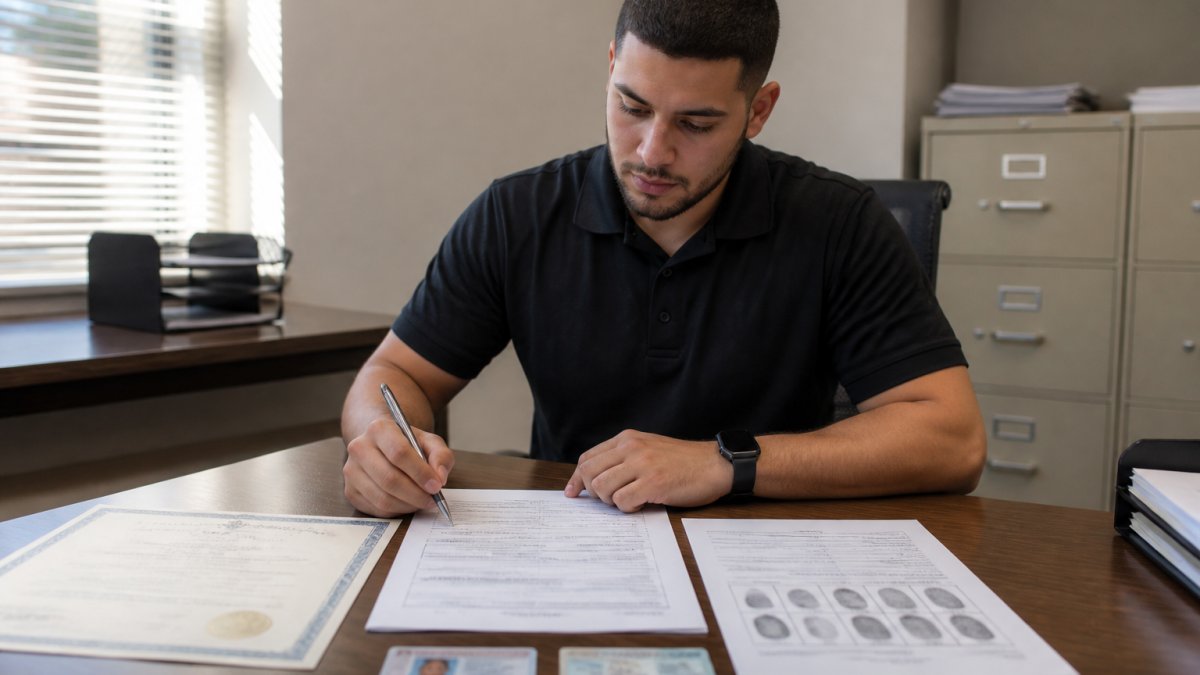
Common Application Mistakes to Avoid
Most rejections and delays stem from preventable errors. Watch out for these:
- Incomplete applications: Missing signatures, blank fields, or unsigned documents. The state returns incomplete applications. Fill out every field. Have someone else review your application before submitting.
- Mismatched information: Your name spelled differently on different documents, or inconsistent dates. Use the exact legal name and dates across all paperwork.
- Missing fingerprints: Submitting your application without fingerprint records. Fingerprints are non-negotiable. Don't skip this step.
- Outdated or expired ID: Using an ID that's expired or not government-issued. Use current, valid identification only.
- Unclear criminal history disclosure: If you have any criminal history, disclose it fully and accurately. Hiding or minimizing it causes rejection and possible legal consequences.
- Paying incorrect fees: Sending the wrong amount or paying to the wrong entity. Confirm the exact current fee and payment method with the New Jersey State Police before submitting payment.
- Missing the deadline: Applications have processing windows. Submit your application promptly after training completion. Don't wait months.
A common question: "What if I make a mistake?" Contact the New Jersey State Police directly. Explain the error. They'll tell you whether you need to resubmit or if it can be corrected. Honesty and quick action usually resolve minor errors.
What Happens After You Complete SORA Training
Once you receive your SORA card, you're legally registered to work as a security guard in New Jersey.
Your SORA registration is valid for two years. The renewal process is different from initial certification, it typically requires fewer hours of training, but you must complete it to keep working legally.
Many employers provide on-the-job training after you're hired. You'll learn their specific procedures, client sites, equipment, and protocols.
Some security professionals pursue additional certifications: CPR and first aid, armed security endorsements, or specialized training in areas like loss prevention or executive protection.
The security industry values experience. Your first job as a licensed security guard builds that experience.
Frequently Asked Questions
Does NJ SORA training require prior security experience?
No. Prior security experience is not required to enroll in NJ SORA training. The Security Officer Registration Act (SORA) training is designed for entry-level applicants with no background in security. The 24-hour initial training course teaches you everything required by the New Jersey State Police, from legal responsibilities and emergency response to professional conduct and security procedures. Employers may prefer candidates with experience, but state certification requirements do not mandate it.
What are the basic eligibility requirements to start NJ SORA training?
You must be at least 18 years old and possess a valid form of identification. You need to be legally authorized to work in the United States. A background check and fingerprinting are part of the registration process after training completion, but you do not need a clean record before applying, the New Jersey State Police will evaluate your background as part of the application review. No prior employment or security experience is necessary to begin the course.
Can I complete NJ SORA training online?
SORA training requirements include classroom instruction and practical assessments that typically require in-person attendance. While some providers offer flexible scheduling or hybrid formats, the New Jersey State Police mandates that approved training providers deliver the full 24-hour initial training course with certified instructors present. Contact Sora Center For Training directly to confirm current training format options.
How long does it take from completing SORA training to getting your license?
After you complete the 24-hour training course and receive your training certificate, you must submit your SORA application to the New Jersey State Police within a 30-day period. The registration process includes fingerprinting and a background check. The total timeline from course completion to active license typically ranges from 2-4 weeks, depending on application processing speed and background check results. Delays can occur if your application is incomplete or if background verification takes longer.
Starting a career in security doesn't require prior experience, just the commitment to complete SORA training and meet state requirements. At Sora Center For Training, we guide first-time applicants through every step: from understanding eligibility, through the 24-hour training course, to submitting your application and receiving your registration card. Our trainers know what beginners need to succeed. Register now and take the first step toward a stable career in security.