 blog
blog
Book Your 24-Hour NJ SORA Course: Complete Guide
Table of Contents
- What Is the 24-Hour SORA Training Requirement?
- SORA Training Requirements for Initial Certification
- Understanding SORA License Cost and Tuition Fees
- Virtual and Online Class Options for Flexible Learning
- SORA Renewal Course: Initial Certification vs. Renewal
- Steps to Book Your Course and Get Licensed
- Common Questions Before You Enroll
- Frequently Asked Questions
Last Updated: September 23, 2026
What Is the 24-Hour SORA Training Requirement?
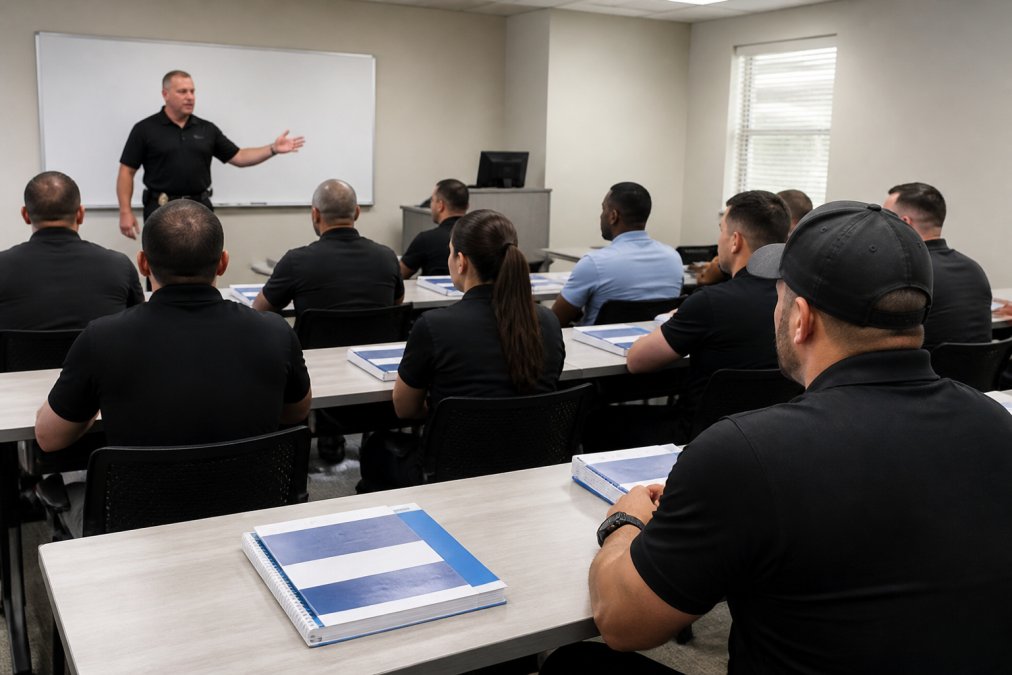
The 24-hour NJ SORA course is a mandatory education program mandated by New Jersey State Police for anyone seeking to work as a licensed security guard in the state. SORA stands for Security Officer Registration Act, the legislation that governs security guard licensing and professional standards in New Jersey. This training covers legal authority, liability, emergency procedures, and professional conduct, serving as the foundation for both initial certification and renewal licensing.
SORA Training Requirements for Initial Certification
Initial certification requires completing the full 24-hour SORA training course through an authorized provider. The state-approved curriculum covers criminal law basics, use of force limitations, customer service protocols, and emergency procedures. Prior security experience does not count toward the requirement, all applicants must complete the full 24 hours regardless of background.
NJ State Police Registration and Background Checks
After completing your training, you'll register with the New Jersey State Police by submitting your course completion certificate and an application with personal information and employment history. The state conducts a background check reviewing criminal history, civil records, and employment verification. Have your Social Security number, driver's license, and employment records ready. The registration process typically takes several weeks.
Fingerprinting and Employment Eligibility
Fingerprinting is a required component of the licensing process. You'll visit an authorized location for digital fingerprint collection (about 15 minutes), and results are sent directly to the New Jersey State Police. Bring a valid photo ID. You'll also need to verify employment eligibility with documentation like a birth certificate, passport, or work visa.
Understanding SORA License Cost and Tuition Fees
The cost of obtaining your security guard license involves multiple components, each with its own expense structure. Understanding the breakdown helps you budget accurately and avoid surprises during the licensing process.
Training Course Costs
The cost of the 24-hour SORA training course varies depending on the provider, format, and scheduling. If your employer offers tuition reimbursement, confirm the maximum amount before enrolling.
State Registration and Licensing Fees
State registration fees cover application processing, background checks, and license issuance. Renewal fees are typically lower.
Fingerprinting and Background Check Costs
Fingerprinting fees vary depending on location and vendor type. Some municipalities offer free fingerprinting to residents; call your local police department or sheriff's office to confirm fees and hours before booking.
Total Investment and Payment Options
The total investment for initial licensure includes training, state registration, and fingerprinting. Many providers offer payment plans. Some employers reimburse training costs after hire. Armed security certification requires supplemental training and may involve higher state fees.
Virtual and Online Class Options for Flexible Learning
Virtual and online options allow you to complete the 24-hour NJ SORA course on a flexible schedule through recorded lectures, interactive modules, and live virtual sessions. You can study evenings or weekends while maintaining your current job. Note that fingerprinting and state registration still require in-person visits, and some providers require proctored exams.
SORA Renewal Course: Initial Certification vs. Renewal
New Jersey requires periodic renewal training to maintain your license. Initial certification is the comprehensive 24-hour course covering foundational knowledge. Renewal training is typically shorter, focusing on regulatory updates and refresher content. Armed and unarmed officers have different renewal schedules. Your license documentation specifies the renewal deadline; missing it means your license expires and you cannot legally work.
Steps to Book Your Course and Get Licensed
Booking your 24-hour SORA course is straightforward, but there are several steps to follow in the right order. Getting the sequence right ensures you don't waste time or money and positions you to start work as quickly as possible after licensing.

Step 1: Verify Provider Authorization and Enroll
Research authorized training providers and verify their authorization with the New Jersey State Police. Contact 2-3 providers to compare schedules, pricing, and formats. Confirm they cover all required curriculum topics and that certificates are state-accepted. Complete enrollment by submitting an application and arranging payment.
Step 2: Complete the 24-Hour Training Course
Attend your course and complete all required material covering criminal law, use of force, customer service, emergency procedures, and legal authority. Take detailed notes on legal concepts and scenarios. If your provider offers a proctored exam, pass on the first attempt to stay on schedule. Keep your certificate of completion in a secure location for state registration.
Step 3: Navigate the State Registration Portal
Within a few days of course completion, begin state registration. Visit the New Jersey State Police website and create an account. Have your Social Security number, driver's license number, and course completion certificate ready. Complete the registration application accurately, filling every field. Upload clear copies of your certificate and proof of identity (PDF or JPG format). After submission, save your confirmation number to track application status (typically 2-4 weeks processing).
Step 4: Schedule and Complete Fingerprinting
After you submit your registration, the state will send you instructions (via email or mail) on where and when to appear for fingerprinting. You'll be directed to an authorized fingerprinting location, often a local police department, sheriff's office, or state facility.
Contact the fingerprinting location in advance to confirm their hours and whether you need an appointment. Bring a valid photo ID (driver's license or passport). The fingerprint collection takes about 15 minutes and is straightforward, a technician will scan your fingerprints digitally, and the results are sent directly to the New Jersey State Police. You'll receive a receipt confirming completion.
Step 5: Job Search While Your License Is Processing
Don't wait passively for your license to arrive. Most employers will hire you pending license completion, especially if you've already finished training and fingerprinting. Start your job search immediately after completing your course.
Where to find security jobs: Check job boards like Indeed, LinkedIn, and ZipRecruiter, filtering for "security officer" or "security guard" roles in your area. Local security firms, retail chains, office buildings, and event venues are common employers. Many post jobs with the requirement "must obtain security guard license within 30 days of hire."
What employers expect: Be prepared to discuss your training completion and fingerprinting status during interviews. Employers understand the licensing timeline and will often hire you contingent on license approval. Confirm in writing that your offer is contingent on successful background clearance and license issuance.
Networking advantage: Ask your training provider if they have job placement resources or employer connections. Some providers maintain relationships with local security firms and can refer graduates directly to hiring managers.
Step 6: Receive Your License and Prepare for Work
When the state approves your application, you'll receive your official security guard license by mail. This document is your legal authorization to work as a security professional. Your license will specify whether you're licensed for armed or unarmed security work and will include an expiration date (typically 3-5 years from issuance).
Before your first day of work, invest in essential equipment and gear. Most employers provide uniforms, but you'll need to purchase:
- Duty belt and holster ($30-$80): Required for carrying keys, radio, and other equipment. If armed, you'll need a proper holster for your firearm.
- Professional shoes ($60-$120): Comfortable, durable shoes suitable for standing 8+ hours. Many employers require black leather.
- Flashlight and batteries ($15-$40): A reliable tactical flashlight is essential for night shifts and emergency situations.
- Notebook and pen ($5-$15): For incident reporting and documentation.
- Watch ($20-$100): To accurately log times for incident reports.
If you're pursuing armed security work, you'll also need to purchase a firearm (if not provided by your employer) and complete firearms training. This is a separate, significant investment.
Common Questions Before You Enroll
Many people have legitimate concerns before investing time and money in the SORA training process. Here are the questions we hear most often, and what you should know.
Do I need prior security experience to pass the course? No. The course is designed for people with no background in security. You'll learn everything from the ground up. Some students have years of security experience, while others are starting their career completely fresh. Everyone completes the same curriculum.
What if I don't pass? Most training providers allow you to retake exams or portions of the course if you don't pass initially.
Frequently Asked Questions
Can I take the 24-hour NJ SORA course online?
Yes, many training providers offer virtual and online options for the 24-hour SORA course. Online classes allow you to complete mandatory training on your own schedule while meeting all NJ State Police requirements. Check with your training provider about which portions can be completed online versus in-person, as some hands-on components or exams may require physical attendance.
What is included in SORA training requirements?
The 24-hour SORA training requirement covers mandatory security industry topics set by the Security Officer Registration Act. The curriculum includes legal responsibilities, emergency procedures, customer service, and professional standards. You'll also learn about NJ State Police registration, background check procedures, and compliance with state regulations. Upon completion, you receive certification that counts toward your security guard license application.
How long does it take to get licensed after completing the 24-hour course?
Timeline varies based on NJ State Police processing. After you finish the 24-hour SORA course, you'll submit your application with fingerprinting and background check results. Most applicants receive their license within 4-8 weeks, though processing times depend on background check complexity and application completeness. Starting your NJ State Police registration immediately after course completion helps speed up the overall process.
What is the difference between initial certification and renewal?
Initial certification requires the full 24-hour SORA course plus background checks and NJ State Police registration. Renewal applies to licensed security guards whose certifications are expiring or have expired. Renewal training requirements are typically shorter than the initial 24-hour course. If your license expired, you may need to complete additional steps beyond renewal training, so verify current requirements with your training provider.